Fender Jaco Pastorius Signature Fretless: Beautiful But Too Perfect
I had the Fender Jaco Pastorius signature fretless bass in my hands. And my first thought was: this is beautiful. My second thought was: it’s too perfect.

Rating: 5/5
Verdict: The Fender Jaco Pastorius Jazz Bass is a fretless Jazz Bass with a pau ferro board and American Vintage single-coil pickups. It plays well and sounds like a Jaco bass should, and with flatwounds it gets surprisingly close to the classic Jaco tone. Its one drawback is that it looks brand new; players who want the worn look of Jaco’s original should consider the Custom Shop Relic.
| Spec | Fender Jaco Pastorius Jazz Bass (fretless) |
|---|---|
| Scale | 34″ (864 mm) |
| Body | Select alder, gloss lacquer, 3-Color Sunburst; no pickguard fitted (pickguard included) |
| Neck / fretboard | Maple, “C” shape; fretless pau ferro slab board with urethane coating, 12″ radius, 20 inlaid fret lines |
| Pickups | Two American Vintage single-coil Jazz Bass pickups |
| Controls | Volume (neck), volume (bridge), master tone |
| Bridge | 4-saddle American Vintage, chrome cover included |
| Tuners | American Vintage reverse open-gear |
| Strings | Fender USA 9050M stainless steel flatwound, .055–.105 |
| Best for | players going for the Jaco fretless tone; fretless players who want a well-playing signature Jazz Bass |
| Not for | players who want an instrument that looks like Jaco’s worn original (the Custom Shop Relic does that) |
Jaco Pastorius’ best-known bass was a 1962 Fender Jazz Bass that he modified himself — pulled out the frets with a butter knife, filled the slots and coated the fingerboard with marine epoxy. Over the years that bass got beaten up, dinged, worn down in all the ways that happen to an instrument that’s played every single night. That damage became part of the identity. The “bass of doom” is iconic partly BECAUSE it looks like it’s been through a war.
Since 1999 Fender has made two fretless versions of the signature model. The standard Jaco Pastorius Jazz Bass, which is what I had access to. And the Custom Shop Relic version, which is painstakingly aged and distressed to look like the original — right down to the worn finish, the scratches, the checking on the lacquer.
The standard version is a fine instrument. Fretless pau ferro board with a urethane coating and inlaid fret lines, two American Vintage single-coil Jazz Bass pickups. It plays well and it sounds like a Jaco bass should. But it looks brand new. It’s pristine. And when you pick it up knowing what the original instrument looked like, there’s this disconnect. This bass should look like it’s been somewhere. It should have stories on it.
Because I only had it for a short time and couldn’t do a proper long-term evaluation, I kept it to a couple of shorts rather than a full review. Here’s the second one with flatwound strings:
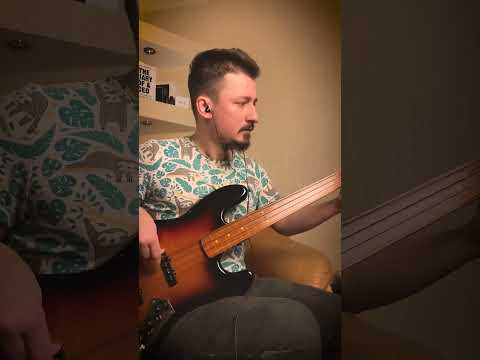
With flatwound strings the character of the bass changes completely. The top end softens, the attack rounds off, and you get this warm, vocal midrange that’s closer to the classic Jaco sound than you’d expect from a modern production instrument. Honestly, if you’re going for the Jaco tone specifically, flatwounds on the standard model might get you most of the way there.
Would I buy one? If I had to choose between the standard and the Relic, I’d go straight for the Custom Shop Relic. The price difference is significant but so is the experience. The standard is a good bass. The Relic is an instrument that makes you feel something every time you pick it up.
The Jaco Pastorius signature fretless bass is Fender’s attempt to document a specific instrument in history. Jaco’s original 1962 Jazz Bass — the one he defretted himself with a butter knife and wood filler, reportedly — was a unique object. Every player who has tried to replicate his tone has had to wrestle with the same question: how much of that sound was the bass and how much was him?
The honest answer is: mostly him. Jaco’s tone came from his right hand as much as anything. The way he would pull the string and let it smack the neck slightly, the combination of that attack with the sustain of the fretless board — that’s technique, not equipment. But the signature model gets you closer to the starting point than a standard Jazz Bass would.
Fretless bass is a fundamentally different instrument than fretted. Intonation is entirely your responsibility. There are no training wheels. Every note requires active listening and micro-adjustment, which means fretless playing is also the best ear training you can do on the instrument.
If you’ve never played fretless before: start with lines you know extremely well on fretted bass. The muscle memory of the interval relationships will give you reference points. Don’t start with new material — you’ll be lost.
The mwah tone — that singing, vocal quality that Jaco made famous — requires low action, round-wound strings, and a right-hand position close to the bridge. It’s setup-dependent as much as technique-dependent. Get the setup right first before you blame your hands.
One of the most common mistakes players make when approaching fretless for the first time is playing too many notes. The instrument rewards restraint. Every sustained note on fretless has a vocal quality that gets obscured if you’re running through fast passages constantly. Slow down, let the instrument breathe, and discover what happens to a well-placed note when it’s allowed to sustain fully. That discovery is why players who get serious about fretless often stay on fretless.
Intonation on fretless improves through listening, not through mechanical practice. Record yourself playing sustained notes against a drone. Listen to the relationship between your note and the drone. Adjust until it locks. Do this every day for a month and your ear will develop faster than almost any other practice method.
The Jaco Pastorius signature is not just a product. It’s a document of what one specific player made possible. Jaco changed the perceived role of the bass in a band context. He proved that the instrument could carry melody, harmony, and rhythm simultaneously without sacrificing any of them. Every bassist working today has been influenced by that, whether they know it or not.
Want to Go Deeper?
Free: Slap Bass Starter Pack
5 video lessons with slow-motion takes, drum loops and tabs. Enter your email and download it right away.
Frequently Asked Questions
What is the Fender Jaco Pastorius Signature Bass?
Since 1999 Fender has made two fretless versions: a standard Artist Series model and a Custom Shop Relic tribute. Both are fretless Jazz Basses based on Jaco’s original modified 1962 instrument. The Relic version is aged and distressed to look like the original.
What’s the difference between the standard and the Relic version?
Primarily the aging. The standard looks brand new — clean finish, no wear. The Custom Shop Relic is hand-distressed to mimic the worn, beaten look of Jaco’s original ‘bass of doom’. The Relic is significantly more expensive.
Why did you only shoot shorts instead of a full review?
I only had the bass for a short time — not long enough to do a proper evaluation across different playing contexts. Two shorts capture the immediate impression better than forcing a review I couldn’t stand behind fully.
Do flatwound strings change the sound significantly?
Yes, dramatically. Flatwounds remove the upper-frequency brightness and give you a rounder, warmer, more vocal tone. For the classic Jaco fretless sound, flatwounds on this bass get you surprisingly close.